Let's be honest about healing timelines
You expected to feel better by now. Three months in, six months in, a year in. And here you are, still moving slowly, still rebuilding, still not quite back to where you were. That's not failure. That's recovery.
Pleasure recovery after relationship rupture, grief, trauma, or major life transition doesn't follow a cute arc. It stalls, it stutters, it sometimes moves backward before it moves forward again. Most of what you've read about "getting your sex life back" assumes a linear path. Most people's actual experience looks more like a map with detours.
Why recovery gets stuck (and why that's normal)
Physical healing and emotional healing operate on different schedules. Your body might be ready before your nervous system is. Your mind might be ready while your body says no. This desynchronization is one of the most common reasons recovery feels slower than expected.
Here's what I see in my practice: people often assume a single trauma or event is the blocker. But recovery is rarely about one thing. It's usually about the accumulated weight of multiple smaller ruptures layering on top of each other. A relationship that lost connection over years, then a health scare, then a medication change, then a betrayal of trust. Each one creates a little more distance from pleasure.
Adding complexity: your nervous system doesn't distinguish between types of threat. Physical pain, emotional betrayal, and anxiety about performance all register the same way. Your body downregulates arousal the same way whether you're recovering from surgery or from heartbreak.
That's why slow recovery isn't a sign you're doing something wrong. It's a sign your system is being appropriately cautious.
The underrated power of consistency (even when progress feels invisible)
One of the most useful things I tell people in the middle of slow recovery is this: you don't have to see the change to be making it. Your nervous system can be recalibrating toward pleasure even when you don't feel it yet.
Using a lemon clitoral vibrator regularly, even when sensation feels muted or orgasms feel distant, teaches your body something important. It says: "This is safe. This is for me. This is allowed." That message compounds over weeks and months in ways you often can't measure week to week.
The consistency matters more than the intensity. Start small. Use a Lemon Suction clitoral vibrator on the gentlest setting, 10 minutes a few times a week. You're not chasing an outcome. You're building a routine. You're giving yourself permission to feel pleasure on your own timeline, without pressure or expectation.
Many people I work with report that the turning point wasn't a moment of sudden breakthrough. It was the day they stopped waiting to feel good and just started showing up for themselves regularly, regardless of the outcome.
Setting realistic expectations in the middle of the healing process
Here's what slow recovery actually looks like on a week-to-week basis.
Week one through four: You might feel almost nothing. Or you feel something, but it's disconnected, like you're watching yourself instead of being inside your own experience. This is dissociation, and it's your nervous system's way of protecting you. Keep going.
Week four through twelve: Some days are better. Some days feel like you've regressed completely. This variance is normal. Your body is testing whether it's safe to let pleasure back in. It will pull back occasionally just to check.
Three to six months in: You might start noticing small things. The sensation is less numb. Arousal builds a little faster. An orgasm that wouldn't have been possible before is now possible, even if it's different from what you remember. These are real wins, even if they feel modest.
Six months and beyond: This is where people often hit a plateau that feels frustrating. The quick early gains slow down. You're dealing with the deeper work now. Rebuilding trust in your own desire. Learning to distinguish between what your partner wants and what you actually want. Reconnecting with your body outside of sex.
This middle section is where most people give up, thinking they're stuck. You're not stuck. You're just past the honeymoon of recovery and into the real work.
Using Lemon Suction tools as part of a broader healing toolkit
Let me be clear about what a vibrator can and can't do. A lemon clitoral vibrator is not a shortcut to healing. It's not a cure. What it is, though, is a powerful tool for learning your body's language again without the pressure of someone else's timeline.
When you're using a vibrator alone, you get to set the pace. You get to stop whenever you want. You get to explore sensation without worrying about your partner's needs or expectations. That autonomy is actually crucial to nervous system recovery.
Choose a gentler vibrator if you're in the early stages of recovery. The Lemon Suction clitoral vibrator works well because you can start on the lowest pattern and build up slowly. The suction sensation is different from traditional vibration. It can feel less overwhelming for people whose nervous systems are still raw.
Start with consistency, not intensity. Five to ten minutes on the lowest setting, a few times a week. You're teaching your nervous system that pleasure is possible again. You're not trying to reach an orgasm. You're just practicing the feeling of letting yourself feel.
The conversation you might need to have with a partner
If you're in a relationship during recovery, your partner needs to understand that your slow healing isn't a rejection of them. It's not a measure of how much you love them or want them. It's your nervous system doing the necessary work of recalibration.
This conversation often needs to happen more than once. People get impatient. They interpret slow recovery as abandonment. They sometimes blame themselves, which then layers their own shame into your healing process. That's not your job to fix.
What helps: naming the timeline. "My nervous system is rebuilding trust in pleasure. That's going to take longer than we expected. I'm not avoiding you. I'm actually doing the work I need to do alone right now." Simple. Clear. Without over-explaining.
Many partners find it helpful to understand that using a vibrator alone is accelerating recovery, not replacing them. Frame it that way. "I'm using this to rebuild sensation so that when we come together, I can meet you with more of myself."

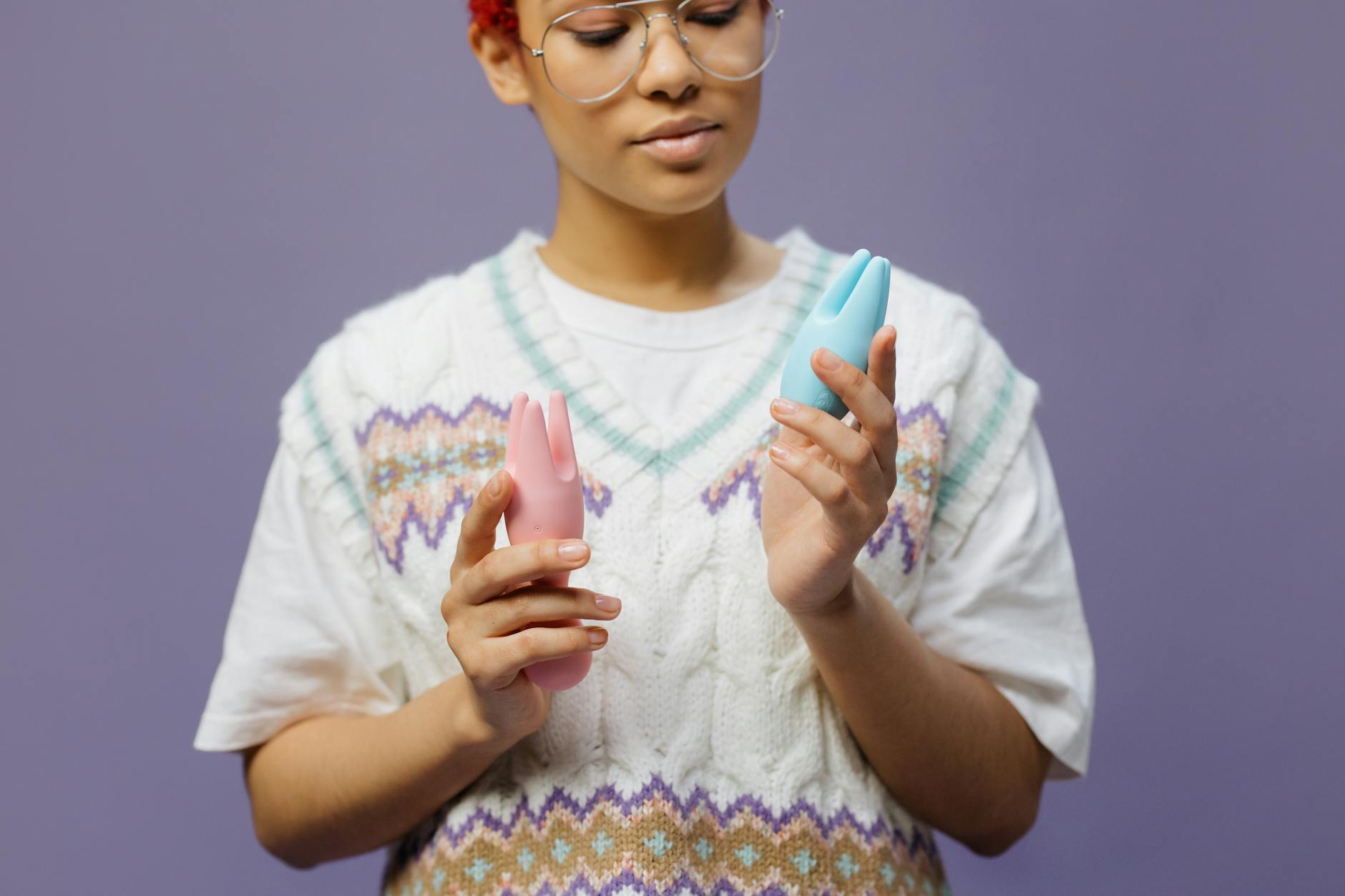
Photo by SHVETS production on Pexels
When to check in with a professional
Slowness itself is not a red flag. But certain signs suggest you might benefit from working with someone who specializes in sexual healing or trauma recovery.
Flag one: You're a year into recovery and still experiencing complete numbness or pain during any kind of touch. That's worth discussing with a therapist or sex-positive healthcare provider.
Flag two: Recovery feels stalled and you're also experiencing significant depression, anxiety, or dissociation in other areas of your life. Your sexual healing is often a mirror of your overall nervous system health.
Flag three: You're in a relationship and your partner is becoming resentful or withdrawn because of slow progress. That dynamic can actually slow recovery further. A couples therapist can help navigate this.
None of these mean you're broken. They just mean you might benefit from some expert guidance during the middle chapters of healing.
The thing about recovery that nobody tells you
The hardest part isn't the early days when everything feels new. It's the middle section when you've done the hard work, you're making progress, but you still don't feel "normal" yet.
That's when people often spiral into doubt. "Will I ever feel the way I did before?" Usually not, honestly. But that's not actually the goal. The goal is to feel the way you want to feel now, after everything you've been through and learned.
Slowness gives you something that speediness never does. It gives you space to actually ask yourself what you want, not what you're supposed to want. It gives you time to rebuild trust, not just in your body, but in your own judgment.
Keep showing up. Use the tools. Be patient with yourself. This is the work. And the work is not failure.
Questions people ask about recovery and vibrators
How often should I use a vibrator if I'm recovering from trauma?
Start with two to three times a week for ten minutes. Consistency matters more than frequency. The goal is to build a routine that feels safe and sustainable, not to push yourself toward an outcome. If you miss a week, that's okay. Just come back without guilt.
Will using a vibrator make real intimacy harder with my partner?
The opposite, usually. Using a vibrator helps you understand your own pleasure response, which actually makes partnered sex more satisfying. You learn what you like, what you don't like, and how to communicate that. That clarity is valuable in any relationship.
What if I'm using a vibrator but still feeling disconnected from my body?
That's still progress. Dissociation is a protective response, and it often takes time to soften. You might try incorporating more sensation work outside of sexual pleasure. Temperature play, different textures, moving your body in ways that feel good. Build bodily awareness across the board, not just in erotic zones.
How do I know if I'm making progress if progress feels invisible?
Keep a simple log. Not orgasms or intensity, but small things. Did you feel less numb? Did arousal come a little faster? Did you enjoy it, even if you didn't climax? These micro-wins add up over months and reveal a pattern you can't see week to week.
Can I use lemon vibrators with a partner if I'm still recovering?
Yes, if it feels right to you. Some people find that using a vibrator together helps their partner understand the pace and pressure that feels good. Others prefer using one alone during recovery and exploring partnered use later. There's no right answer. Your comfort level is the only standard.
What if recovery is taking so long that my partner is losing patience?
That's a real problem that needs a direct conversation or professional help. Recovery can't be rushed for someone else's timeline. If your partner is becoming resentful, that actually slows healing. This is where working with a relationship coach or couples therapist becomes really valuable.
You're not behind, you're healing
Recovery takes the time it takes. Some chapters move fast. Some chapters feel impossibly slow. The pace doesn't measure your resilience or your capacity for pleasure. It measures how wisely your system is protecting you while you rebuild.
Use the tools. Stay consistent. Trust the timeline. Your pleasure is waiting for you on the other side of this, and it's going to be deeper and more intentional than it was before you had to fight for it.
If you want to explore this further or discuss what tools might work best for your specific situation, reach out to us. We're here to help.