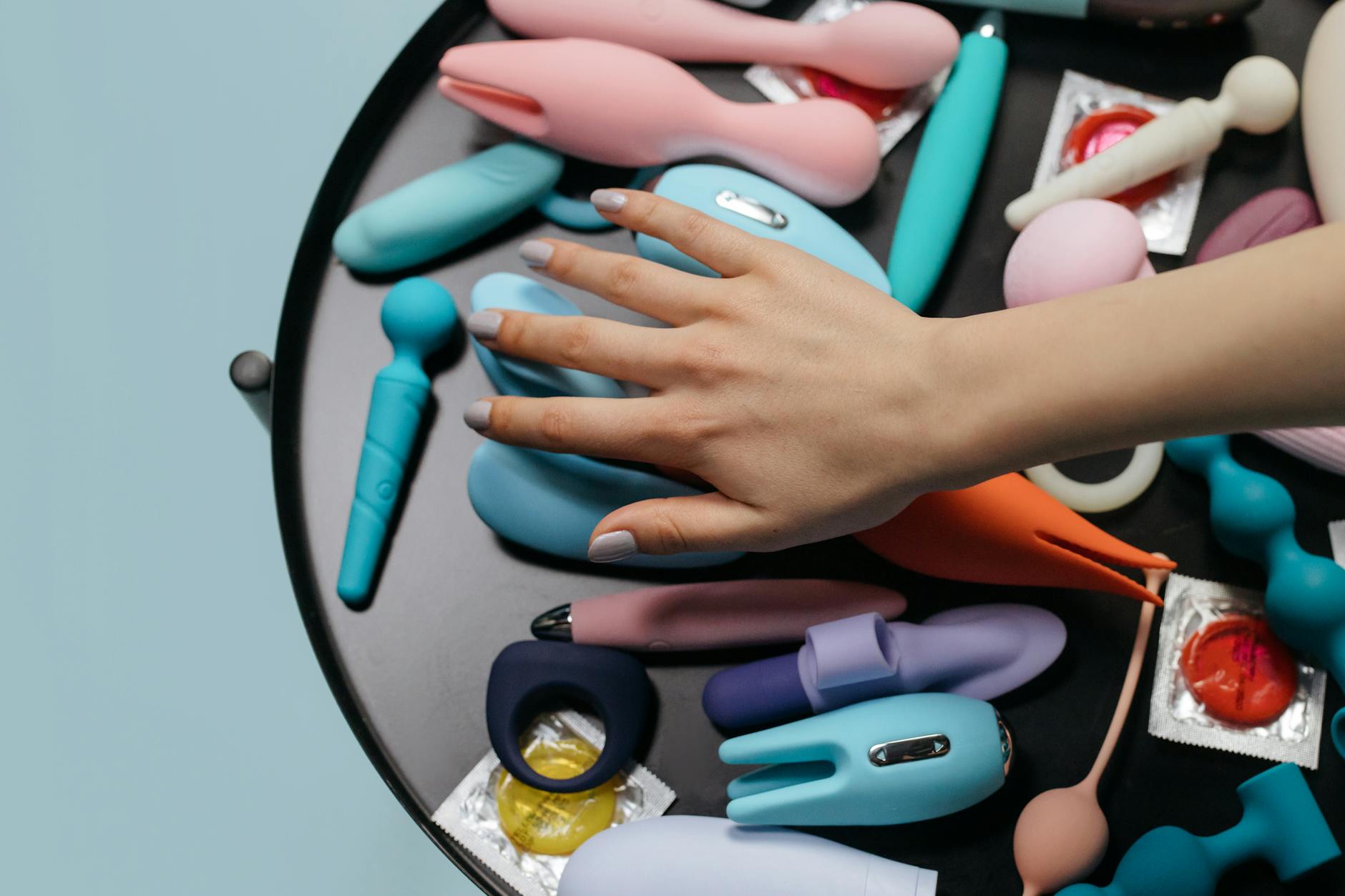
Here's the thing about inconsistent orgasms
You're not broken. Your body isn't malfunctioning. What you're actually experiencing is a timing and technique mismatch, and that's fixable.
I work with clients all the time who can orgasm sometimes, with the right conditions, after the right amount of time, with exactly the right pressure. The issue isn't that you can't come. It's that the path to getting there keeps shifting, and you're exhausted from the guesswork. That inconsistency tanks confidence, which makes the next attempt even harder. It's a cycle, not a diagnosis.
The good news: lemon vibrators, combined with a structured approach, solve this problem for most people within 2-3 weeks.
Why consistency matters more than intensity
Here's what I've learned from working with couples through decades of intimacy challenges. People obsess over how big the orgasm is. That's actually the wrong metric. What matters is reliability. Can you count on your body to respond? That predictability is what builds confidence and actually makes orgasms better over time.
A consistent, moderate orgasm beats a rare, intense one because your brain learns: this works, I can relax into it, I don't have to perform or chase it. That mental shift is half the battle.
When you use a lemon clitoral vibrator with intention, you're not just adding stimulation. You're teaching your nervous system a repeatable pattern. The suction mechanism on lemon sexual toys creates consistent, controlled pressure that your body can learn and predict. That's different from a traditional vibrator, which can feel scattered or require constant adjustment.
The framework that actually works
I break this into four phases, each 5-7 days. Most people see results by phase two.
Phase One: Pattern Recognition
Use your lemon vibrator alone, no pressure to orgasm. Pick the same time of day (I recommend morning or early evening, when cortisol is lower). Start with pattern 1 or 2 on the lem vibrator. You're not trying to come. You're just noticing: what pressure feels good right now? Does it change after 30 seconds? Does it feel better with lube? Write it down.
Do this five times. You'll see patterns emerge. Most people discover they prefer a lighter touch than they think, and that pressure needs to shift slightly after a few minutes.
Phase Two: Building the Sequence
Now you're using what you learned. Apply lube (always). Start at pattern 1, stay there for 3-4 minutes, then move to pattern 2. Stay there for 3-4 minutes. Notice your arousal building. Don't rush to the highest setting. The goal is smooth escalation, not jumping.
If you feel yourself tensing up or getting frustrated after 12 minutes, stop. You're building endurance, not forcing an outcome. Consistency beats pushing through.
Phase Three: Adding Variability Within Structure
You know the basic sequence now. This week, try small changes. Maybe you start at pattern 2 instead of 1. Maybe you hold each pattern for 5 minutes instead of 4. Maybe you angle the lem vibrator differently. The point is to prove to yourself that the core sequence is solid enough to handle small tweaks.
This is when most people start seeing reliable orgasms. Your body has learned the pathway.
Phase Four: Real-World Integration
You can now orgasm consistently alone. The question is usually: how do I bring this into partnered sex? Or how do I integrate this without it feeling clinical?
Honestly, the clinical phase was important. You needed to know what works before you tried to perform it. Now you take that knowledge into partnered time. Some couples use lemon vibrators during sex. Others use the solo practice to build confidence, then transition away from the toy for partnered sessions.
There's no